
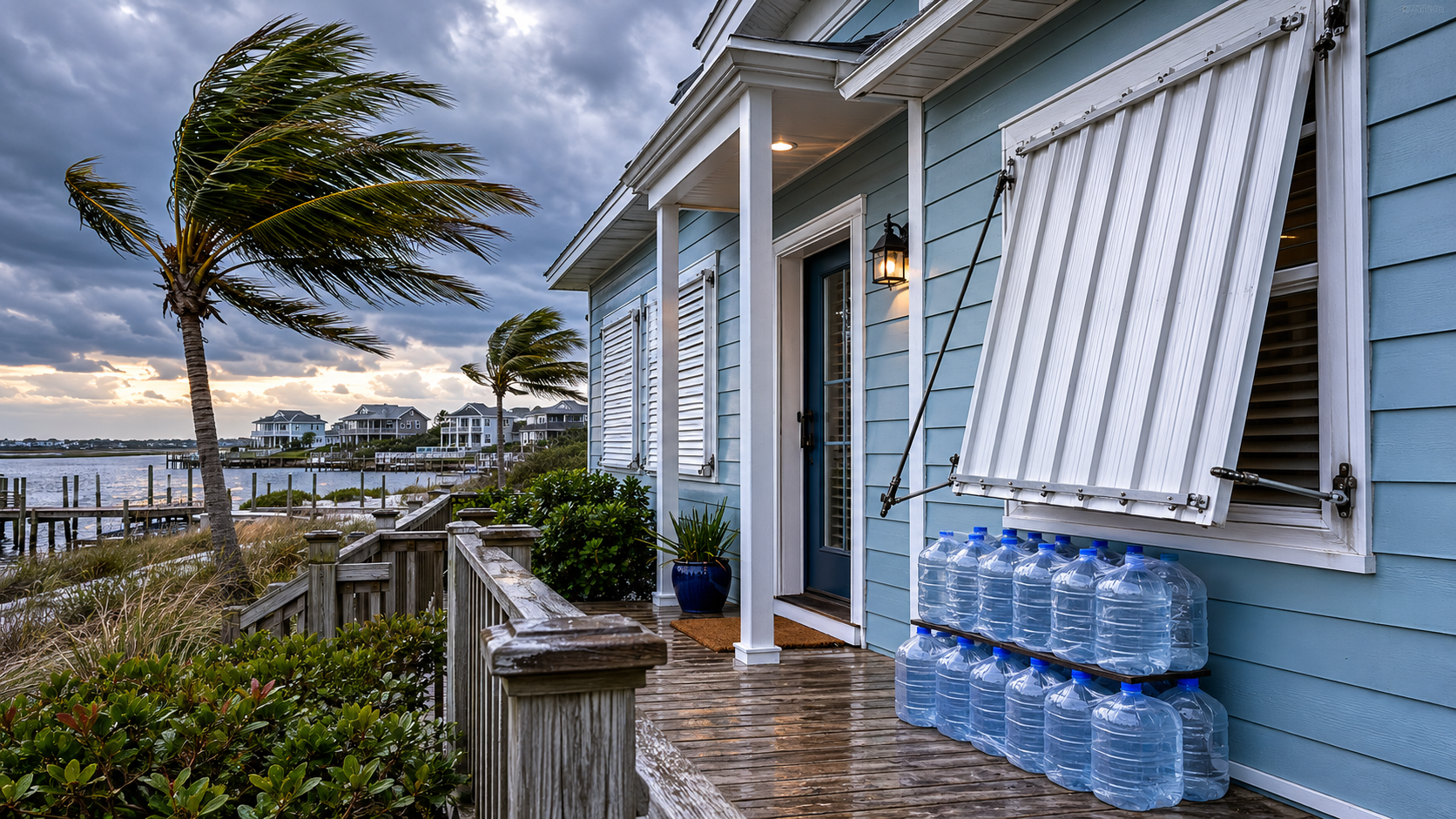
Hurricane season starts June 1 and runs through November 30, and for IV therapy in North Carolina during hurricane season the practical question is not whether a storm hits, but how prepared your household is for the days afterward. Power can go out for two to ten days in heavily impacted parts of the state. Boil-water notices roll out across counties. Restaurants close, gyms close, pharmacies run thin on supplies, and most people quietly slip into mild dehydration without noticing because the routines that normally hydrate them are off the rails.
The point of this primer is not to scare anyone. It is to walk through what your hydration reserves should look like before a storm, what to watch for in the days after, and where IV therapy fits into the picture for North Carolina residents whose work, training, or health situations cannot tolerate a week of recovery limbo.
What “hydration reserves” actually means
Reserves are not a tank you fill up in advance. The body holds roughly 60 percent water by weight, and it constantly cycles through that pool through sweat, breath, urine, and digestion. What you really store is the capacity to absorb fluid quickly when you drink, and the electrolyte balance that lets your cells hold onto that fluid. Both go sideways during a hurricane event.
Disrupted sleep, higher stress hormones, irregular meals, salty disaster food (peanut butter, crackers, jerky), warm indoor temperatures with no AC, and physical labor like clearing yards or moving furniture all push you toward dehydration. The standard advice of “drink more water” works in a normal week. In a post-storm week, the demand is higher, the supply is interrupted, and the absorption is impaired by everything happening around it.
The CDC’s baseline for emergency water
The CDC’s official guidance on emergency water supply recommends storing at least one gallon of water per person per day for at least three days, with two weeks of supply preferred if you have the storage space. The full CDC guide on how to create an emergency water supply includes detailed instructions on safe containers, rotation, and contamination prevention. That is your floor. People who are pregnant, sick, on certain medications, or working in hot conditions need meaningfully more.
Where hurricane season hits North Carolina hardest
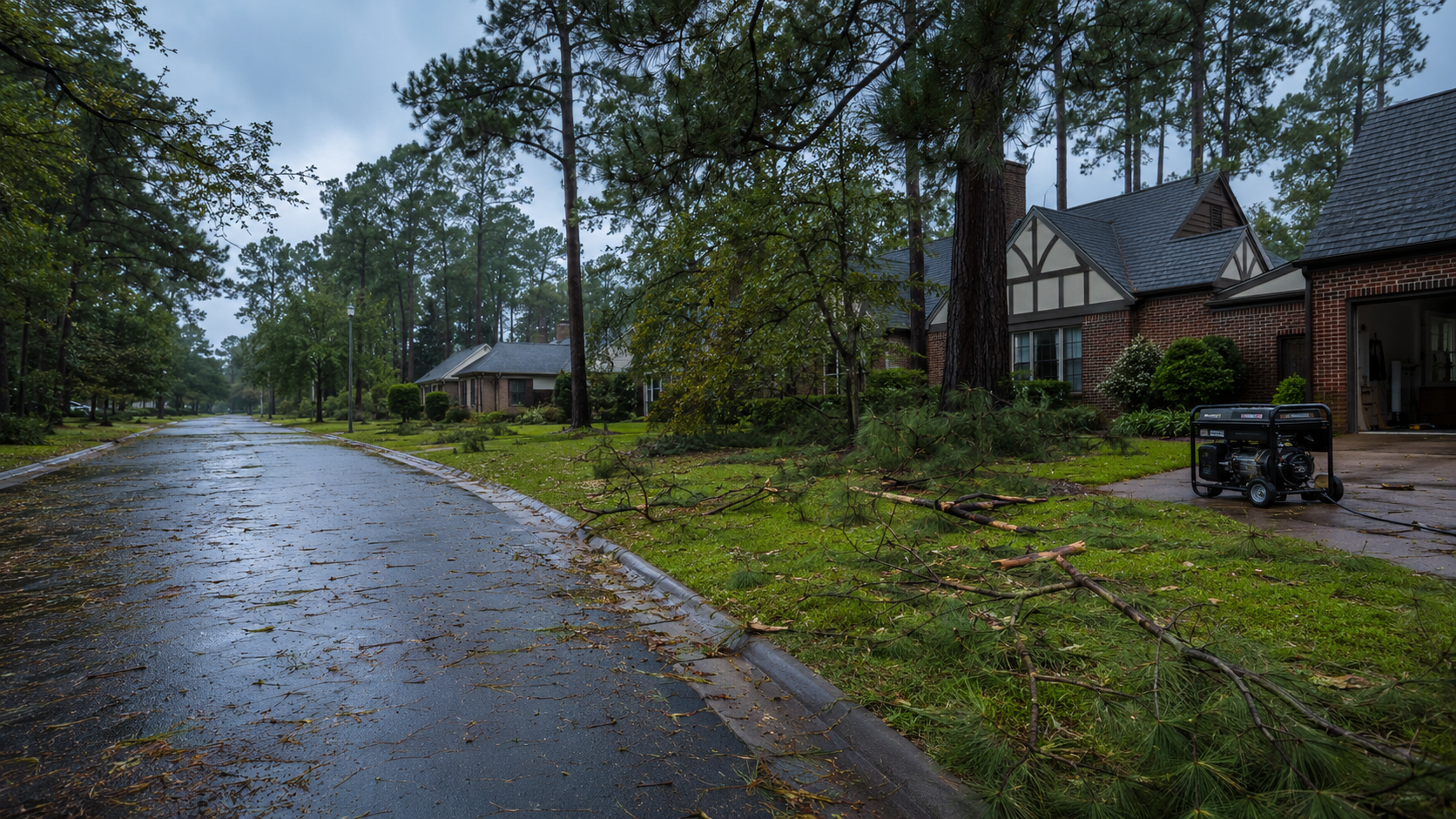
The eastern half of the state takes the brunt of named storms, but the Piedmont and the Charlotte metro area get the leftover energy, which arrives as days of heavy rain, gusts, and flash flooding. Outages from downed trees and saturated soil are routine even hundreds of miles inland. Mecklenburg, Cabarrus, and Iredell counties all dealt with multi-day outages during recent storms, including residents in Charlotte, Concord, Mooresville, Huntersville, Cornelius, and Davidson.
For coastal and eastern NC residents, the impact is more direct. Boil-water notices, gas shortages, displaced families, and emergency shelter stays add a layer of physical stress that the rest of the state usually does not face. For inland NC residents, the impact is more about disrupted routines, intermittent power, and the cleanup days that follow.
Why mild dehydration sneaks up after a storm
You forget to drink because the kitchen routine is off. You sweat more than usual because the AC is out. You drink more coffee and less water because there is no fresh food. You skip your usual workouts but spend hours moving debris in the heat, which is its own form of exertion. None of these are obvious red flags individually. Together, they can knock down a healthy adult’s hydration status meaningfully in 24 to 48 hours, and the symptoms get blamed on stress instead of fluid balance.
How IV therapy fits into a North Carolina hurricane plan
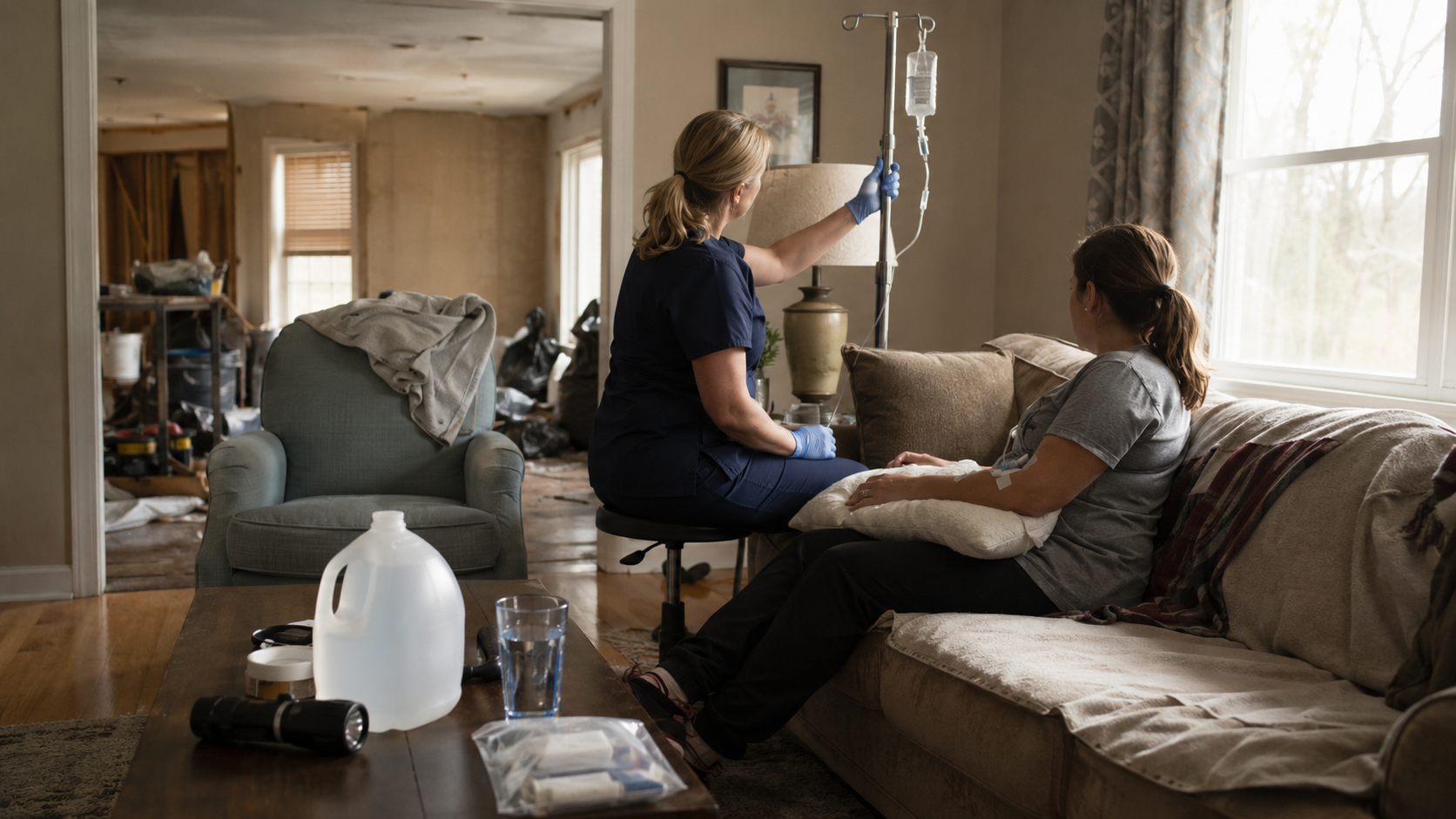
To be clear, IV therapy is not emergency medicine. If you or a family member shows signs of severe dehydration, heat stroke, infection, or any of the other genuinely scary outcomes of storm exposure, you go to the emergency room, not a wellness service. The role of IV therapy in a hurricane plan is the next layer in, for the days after the immediate crisis passes, when household members are not sick enough to need urgent care but not well enough to function the way they normally do.
For an adult who spent two days clearing a flooded basement, slept poorly because of generator noise, ate whatever was in the pantry, and now feels foggy and heavy, a clinical hydration infusion can short-circuit the recovery timeline. The Restore IV drip covers the basics: a liter of saline, B-complex for energy, and core electrolytes. For people who picked up a cold or stomach bug in the chaos, the Immunize IV drip layers in high-dose vitamin C and zinc to support immune recovery while addressing the same hydration gap.
Pre-storm prep that actually moves the needle
Three things consistently matter more than the rest. First, water storage: hit the CDC minimum of one gallon per person per day and aim higher if you have room. Second, electrolyte packets: a box of clinical-grade oral rehydration salts (not the sugary sports drink mixes) is cheap insurance and weighs nothing. Third, a stocked pantry that does not lean heavily on shelf-stable salty snacks, because those amplify dehydration when fresh produce is scarce.
If your household includes someone with a chronic condition, an athlete in training, a small business owner who cannot afford to lose a week of work, or someone recovering from recent illness, plan for the recovery window before the storm hits. That includes knowing which mobile services in your area can dispatch quickly once the all-clear sounds.
What to watch for in the days after a storm
Mild dehydration is easy to miss when the whole household is keyed up. Watch for the simple stuff: urine darker than light straw, headache that does not respond to a glass of water, slower thinking than normal, dizziness when standing, a mild fever or low-grade muscle ache that does not match what you actually did physically. None of these are emergencies on their own, but two or three together over 24 hours is a signal that fluid balance and electrolytes are off.
Older adults, kids, pregnant women, people on diuretics or blood pressure medication, and anyone with diabetes need extra attention. Their margin for hydration error is thinner. So is the margin for anyone who started the storm window already run down by work travel, illness, or training.
Booking IV therapy in NC after the storm passes
Mobile teams across the state usually resume operations within 24 to 48 hours of an all-clear, depending on road conditions and power. If you anticipate needing a session, scheduling early in the recovery window beats waiting; demand spikes once people realize their usual fixes are not working. Planning ahead for a household member with a chronic condition, a training schedule, or recent illness pays off more than people expect; contact the team before the storm so the post-storm dispatch is ready.
Frequently Asked Questions
Does IV therapy in North Carolina hurricane season require special booking?
Not in advance of a storm, but timing matters. Most mobile teams pause operations during the storm itself and resume once the all-clear is given. Booking in the first 48 hours of recovery is competitive because demand spikes. If you anticipate needing a session, calling or messaging the team before the storm helps secure a window.
How quickly does IV therapy help with post-storm fatigue and dehydration?
Most people notice meaningful improvement within the 30 to 45 minute infusion itself, especially the headache and brain fog that come with mild dehydration. Energy and sleep quality usually catch up over the next 24 hours. IV therapy is not a substitute for adequate rest, food, and clean water, but it shortens the gap between feeling depleted and feeling functional.
Can I use IV therapy instead of going to the emergency room?
No. IV therapy is for mild to moderate dehydration and post-event recovery, not for medical emergencies. Severe dehydration, heat stroke, infection, chest pain, confusion, fainting, or any acute symptom needs emergency care. If you are uncertain whether your symptoms cross that line, call your doctor or 911 first. The mobile IV team can also help you decide if it is the right tool.
Is IV therapy safe during pregnancy or for older adults after a storm?
Both groups can benefit, but the formulation and dose may need adjustment. Pregnant clients require provider approval and modified ingredients. Older adults, especially those on heart or blood pressure medications, also need a careful review. Mention any conditions or medications during your intake call so the nurse practitioner can adjust the plan before your appointment is scheduled.
What should I drink while waiting on power and water to come back?
Stick to bottled water if your tap water is on a boil-water notice. Add a clinical oral rehydration salt packet once or twice a day if you are sweating, doing cleanup work, or feeling lightheaded. Skip alcohol and limit caffeine, both of which work against your fluid balance. Save sugary sports drinks for actual heavy exertion, not as a sipping default.
How does IV therapy compare to drinking electrolyte packets at home?
Electrolyte packets are great front-line tools and should be in every hurricane kit. They work for mild dehydration and routine maintenance. IV therapy is meaningfully faster and more complete because it bypasses digestion and delivers fluid and nutrients straight to the bloodstream. For severe fatigue or compounded depletion, the difference in recovery speed is large.

