
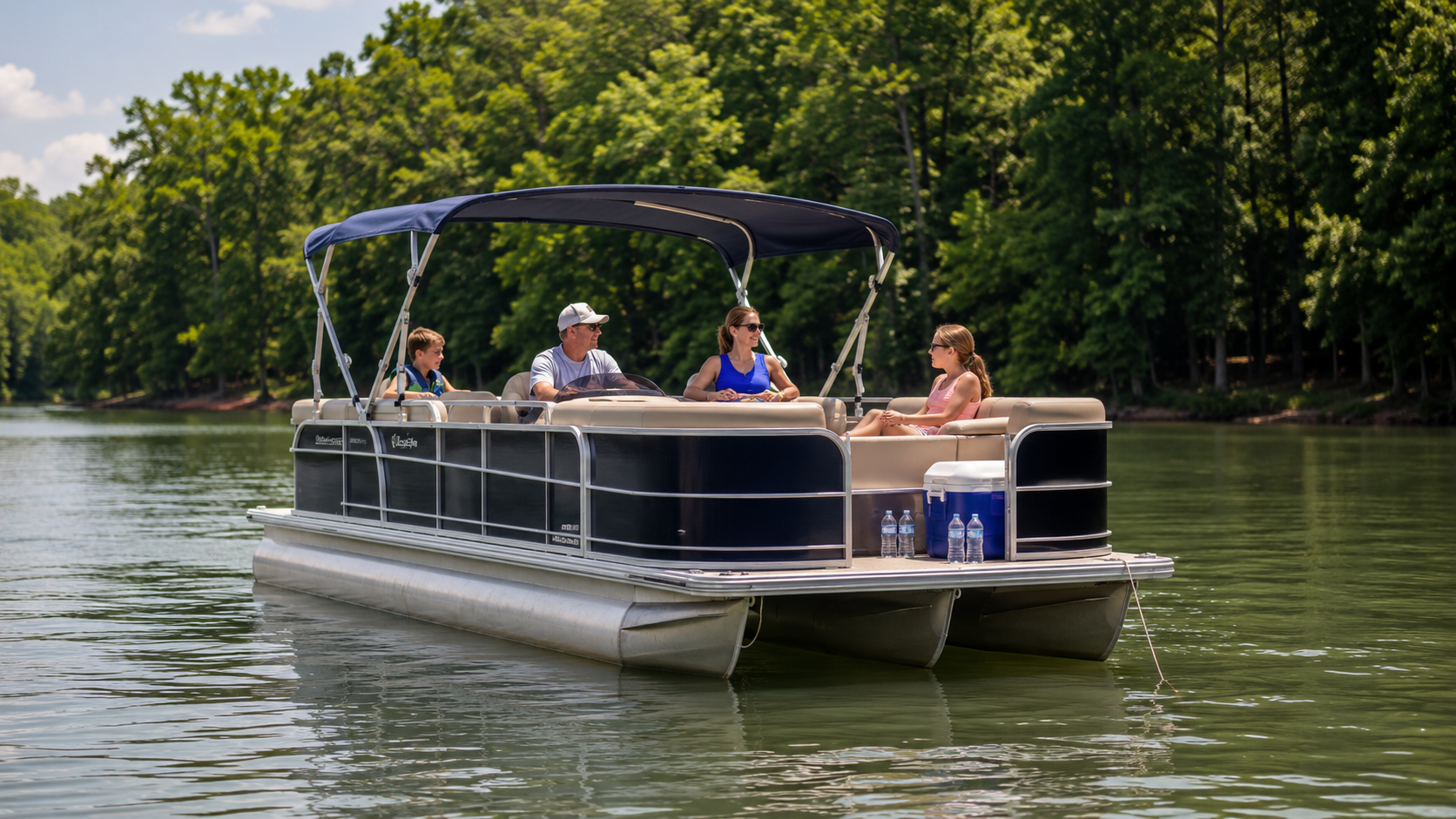
TL;DR: A full day on Lake Norman drains fluids fast; a smart Lake Norman IV therapy hydration plan helps boaters in Cornelius, Davidson, and Huntersville recover quicker.
A long summer day on Lake Norman quietly pulls more water out of your body than most boaters expect. Sun, wind, dock beers, and the constant motion of the water all add up, and by the time you tie off at the end of the afternoon you can be several cups behind. That is why a Lake Norman IV therapy hydration plan matters for anyone spending July weekends on the water near Cornelius, Davidson, or Huntersville. This guide walks through why the lake dehydrates you, what warning signs to watch for, and how at-home IV therapy fits alongside good old-fashioned water.
Why a Day on the Water Dehydrates You Faster Than You Think
Open water fools your body. The breeze coming off Lake Norman evaporates sweat before you notice it, so you rarely feel drenched the way you might on a tennis court. Meanwhile the sun reflects off the surface and hits you twice, once from above and once from the water, which raises your core temperature and pushes your sweat rate up. You lose fluid and electrolytes the whole time without the obvious cue of a soaked shirt.
Add a few factors common to a Carolina lake day and the math gets worse. Alcohol is a diuretic, so those dock drinks send more water out than they put in. Salty snacks pull fluid toward your gut. And most people simply forget to sip water when they are busy tubing, fishing, or wrangling kids on the swim platform. By late afternoon a mild fluid deficit can turn into the headache, sluggishness, and cranky mood that so many families chalk up to “too much sun.”
The Cornelius, Davidson, and Huntersville Boater Profiles
Every town along the lake has its own rhythm, and hydration needs shift with it. Understanding your own pattern is the first step toward staying ahead of it.
Cornelius: the all-day cruiser
Cornelius sits right on the water, and its boaters tend to launch early and stay out. Ramp Road and the coves off Jetton Park fill with pontoons by mid-morning. If your day runs from breakfast to sunset, you are looking at eight or more hours of sun exposure, which means hydration has to be planned rather than improvised. Longtime Cornelius boaters know the afternoon lull hits hardest around three o’clock, right when the heat peaks.
Davidson: the active weekender
Davidson pulls a more athletic crowd, with paddleboarders, wake surfers, and rowers sharing the water with the college-town energy of the area. These are shorter, higher-intensity outings where sweat loss spikes fast. A ninety-minute wake session in July can cost you more fluid than a lazy four-hour cruise, so recovery afterward matters just as much as it does for endurance athletes.
Huntersville: the family day-tripper
Huntersville families often trailer over for the afternoon, load up the cooler, and try to keep three kids sunscreened and fed at once. In the shuffle, the adults are usually the ones who forget to drink. Packing labeled water bottles for each person and setting a phone reminder to sip every twenty minutes can quietly prevent the end-of-day meltdown on the drive home.
Signs Your Body Is Running Low
Thirst is a late signal. By the time your mouth feels dry, you are already behind, so it helps to watch for earlier clues. A dull headache, a dip in energy, muscle cramps in the calves or hands, and darker urine are all common flags. According to the CDC’s guidance on heat and your health, dehydration is a primary contributor to heat exhaustion, and the body’s ability to cool itself drops as fluid levels fall.
The more serious signs deserve real attention. Dizziness when you stand, nausea, a rapid pulse, or confusion can mean heat exhaustion is setting in, and that is a get-out-of-the-sun-now situation. Move to shade, cool down, and rehydrate. If symptoms do not ease, seek medical care. Nothing in this guide is a substitute for a doctor, and heat illness can escalate quickly on the water where shade is scarce.
Building a Hydration Plan Before, During, and After
The boaters who feel good at sunset are almost always the ones who started hydrating the day before. Here is a simple framework that works for the Lake Norman corridor.
Before: Drink a full glass of water with breakfast and top off before you leave the dock. Going out already hydrated buys you a cushion for the hours when you inevitably fall behind. Skip the extra coffee if you can, since caffeine adds to the fluid you will need to replace.
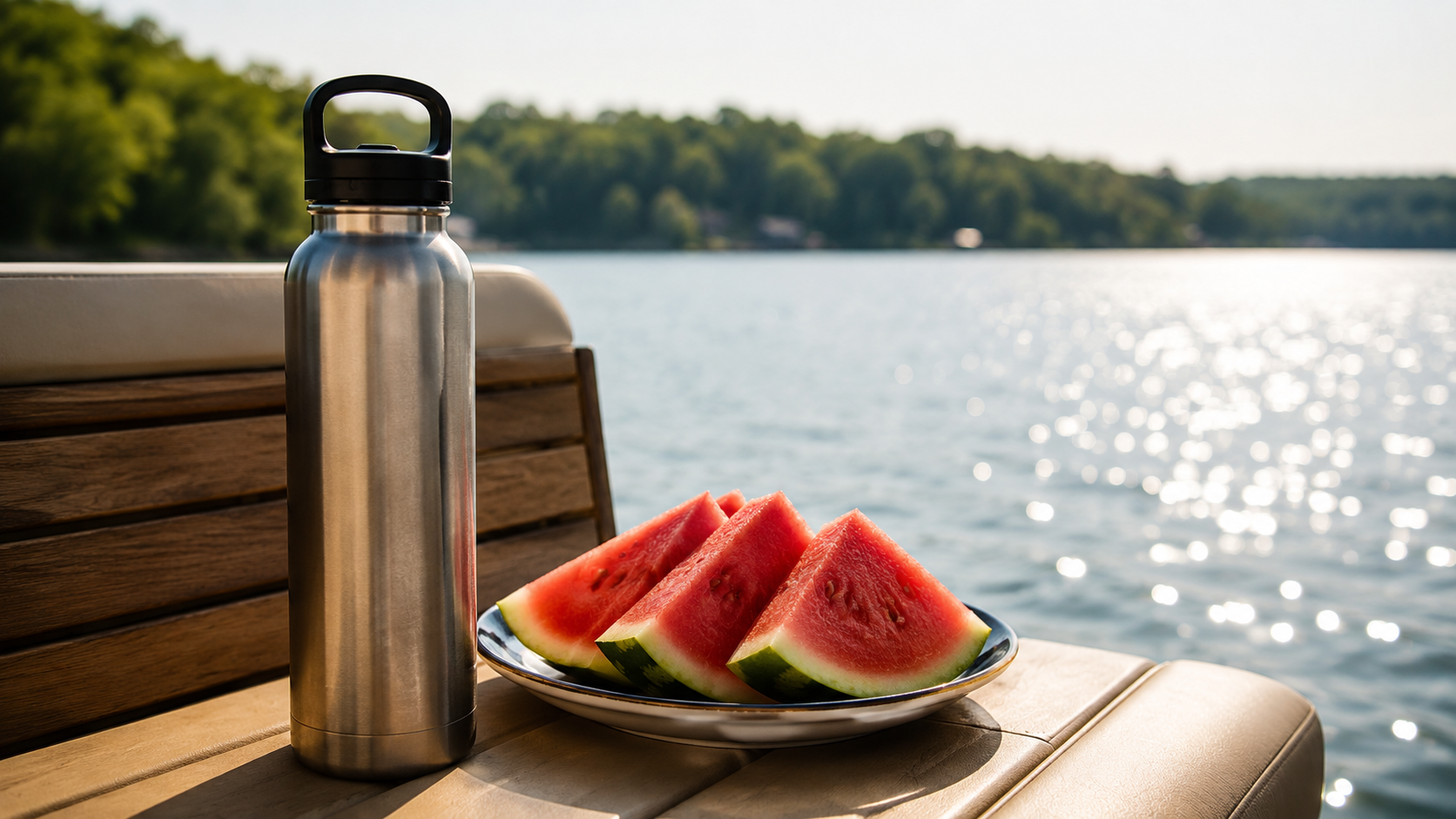
During: Aim for water every fifteen to twenty minutes, not every time you remember. Alternate any alcoholic drink with a full glass of water, and lean on electrolyte packets rather than plain water alone when you have been sweating hard for hours. Water with high water-content snacks, like watermelon or cucumber, helps too and is easy to keep in the cooler.
After: The evening after a big lake day is when a real recovery routine pays off. Rehydrate with electrolytes, eat a balanced meal, and give your body the fluid it spent all afternoon losing. For anyone who ended the day genuinely wiped out, this is where clinical rehydration can shorten the bounce-back.
Timing your plan around the lake’s daily rhythm helps too. The heat off the water peaks in the early afternoon, so front-load your fluids in the morning before the sun is high, then stay consistent through the hottest stretch instead of trying to catch up later. Docking for a shaded lunch break, even a short one, gives your body a chance to cool and lets you drink without the distraction of driving the boat. Small habits like these are what keep a Cornelius or Huntersville family feeling good from launch to loading the trailer at dusk.
Where Mobile IV Therapy Fits
Oral hydration handles most lake days, but it has limits. When you are already several cups behind, your gut absorbs water slowly, and drinking more can leave you bloated before it leaves you rehydrated. Intravenous fluids skip the digestive step and deliver hydration and electrolytes directly into your bloodstream, which is why so many Lake Norman residents book a drip after a heavy weekend on the water.
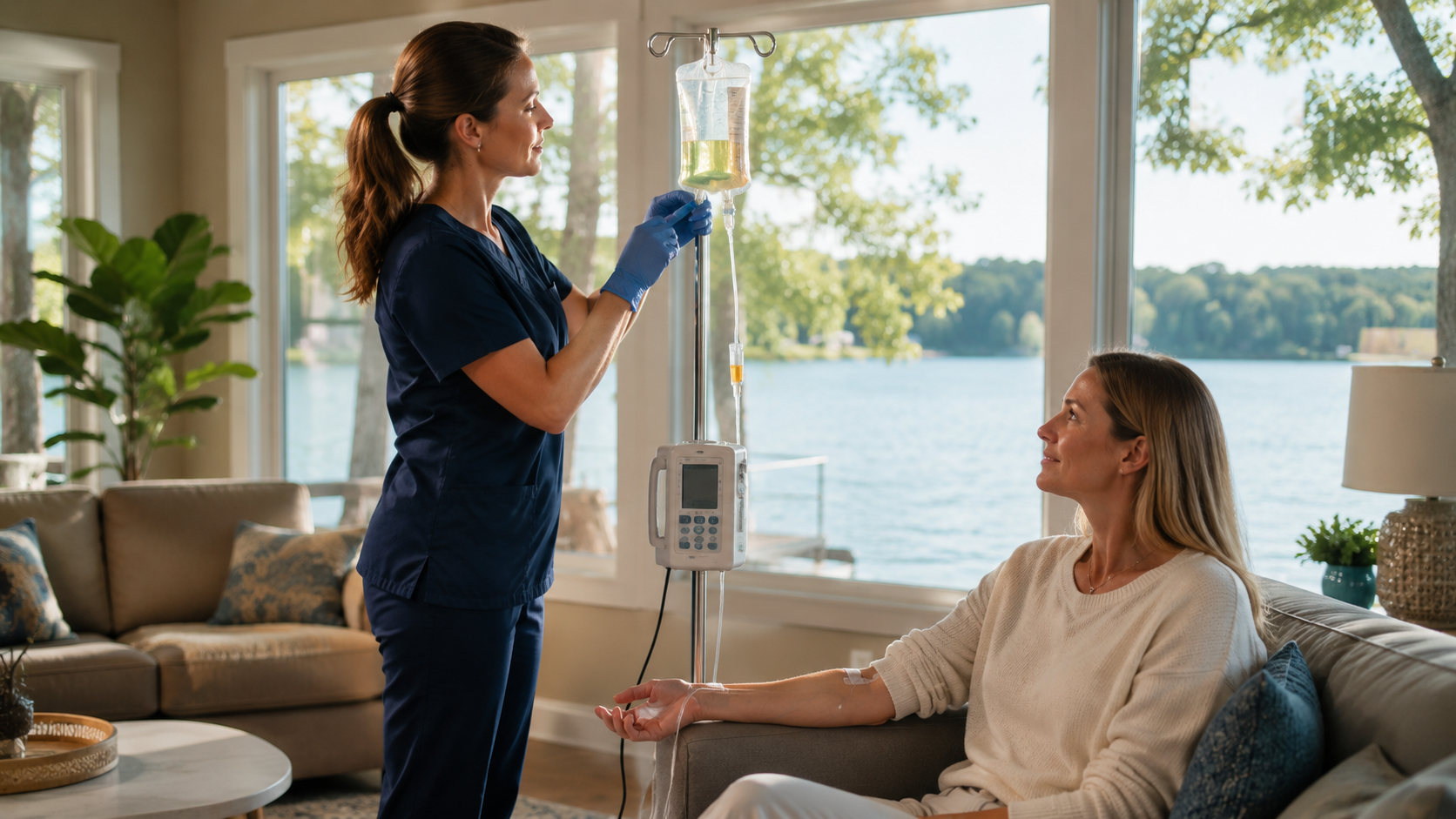
Our Restore drip is built for exactly this scenario, pairing fluids with electrolytes to help you rebound after a long, sun-soaked day. Weekend athletes putting in hard wake or paddle sessions off Davidson often prefer The Athlete, which adds nutrients aimed at muscle recovery and performance. Because the service comes to you, there is no need to drive anywhere after a draining afternoon; a licensed provider sets up in your living room while you finally sit down.
Convenience is a real part of the appeal. If you live in one of the lakefront neighborhoods, IV therapy in Cornelius and the surrounding towns means treatment happens at home, on your schedule, the same evening or the next morning. For families juggling tired kids and a full cooler to unpack, having recovery come to the door removes the last hurdle at the end of a long day.
Frequently Asked Questions
How much water should I drink during a full day on Lake Norman?
Plan on water every fifteen to twenty minutes rather than waiting for thirst. For an all-day outing in July heat, most adults need well beyond the usual eight cups, since sun, wind, and sweat raise fluid loss. Alternate any alcoholic drink with a full glass of water.
Does IV therapy help with hydration after boating?
It can. Intravenous fluids deliver hydration and electrolytes directly into your bloodstream, bypassing the slower absorption of your gut. That makes IV therapy useful when you are already well behind on fluids after a long, hot day on the water and drinking more is not catching you up quickly.
Is a Lake Norman IV therapy hydration appointment done at home?
Yes. Mobile IV therapy comes to your home, dock house, or rental across Cornelius, Davidson, and Huntersville. A licensed provider arrives, sets up, and administers the drip while you relax, so there is no driving after an already draining afternoon in the sun.
What are the early warning signs of dehydration on the water?
Watch for a dull headache, low energy, muscle cramps, and darker urine before thirst even sets in. Dizziness on standing, nausea, a racing pulse, or confusion are more serious and can signal heat exhaustion, which means getting out of the sun and cooling down right away.
Can kids get dehydrated faster than adults at the lake?
Children can dehydrate quickly because they may not notice or mention thirst while they are busy playing. Pack a labeled water bottle for each child, offer water-rich snacks like watermelon, and set a recurring reminder to pause for a drink every twenty minutes throughout the day.
How soon after a big lake day should I book a recovery drip?
Same evening or the next morning works well. Rehydrating promptly, whether orally or through a drip, helps you feel closer to normal faster. If you finished the day genuinely wiped out, booking a provider to come to you that night removes the effort of going anywhere.

